
What Is Muscle Energy Technique (MET)? A Clinical and Practical Explanation
Muscle Energy Technique (MET) is a precise, low-force manual therapy method that uses the client’s own muscle contractions to restore normal joint motion and muscle function. Rather than forcing tissues to change, MET works by engaging the nervous system and resetting muscle tone through gentle, controlled effort.
MET is widely used in orthopedic and clinical massage settings because it is safe, specific, and highly effective for improving mobility and reducing dysfunctional muscle tension.
The core idea behind Muscle Energy Technique
A foundational principle of MET is often summarized as: “Bone is the slave of muscle.” Bones do not move on their own. They are positioned and controlled by muscular tension. When a joint is restricted or misaligned, the underlying cause is almost always muscular.
MET addresses the muscle first. When the muscle’s tone is normalized, the joint is able to move freely again.
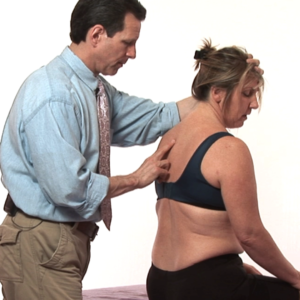
What problem MET is designed to solve
When a muscle becomes hypertonic or neurologically “stuck” in a shortened state, it pulls joints out of optimal alignment and restricts motion. This can lead to:
- Restricted range of motion
- Postural asymmetry
- Chronic tension and discomfort
- Compensatory movement patterns
MET identifies the specific muscle responsible and uses a gentle contraction to reset its resting tone.
How Muscle Energy Technique works neurologically
MET works primarily by influencing muscle spindles — the neurological sensors inside muscles that regulate tone and length. After injury, overuse, or stress, these spindles can become “reprogrammed” to hold unnecessary tension.
Through gentle isometric contraction followed by full relaxation, MET helps return the spindle to its normal setting, allowing the muscle to lengthen and function normally again.
What MET can accomplish in clinical practice
- Relaxes tight or spastic muscles
- Mobilizes restricted joints
- Improves symmetry and posture
- Reduces localized swelling by restoring circulation
- Improves overall movement efficiency
Many clients feel warmth or increased circulation in the area immediately after treatment due to restored blood flow.
Learning MET in a structured clinical way
If you want step-by-step training in both joint-based and muscle-based MET for the upper and lower body, our Muscle Energy Technique Online Course teaches precise assessment, positioning, and application for real clinical use.
To explore more clinical massage and manual therapy concepts, visit our Reference Library.
To understand the neurological mechanics behind MET in more detail, read How Muscle Energy Technique Works: Motion Barriers, Spindles, and Neuromuscular Resetting.