
Trigger Point Referral Patterns Explained for Massage Therapists
One of the most confusing parts of working with pain is that the place a client feels discomfort is often not where the problem starts. Trigger points are a common reason for this. They frequently create referred pain patterns that send symptoms into other areas of the body.
Understanding referral patterns changes how you assess and treat clients. Instead of chasing pain, you learn to look for the tissue that is actually causing it.
This article explains what trigger point referral patterns are, why they happen, and how massage therapists can use them in practical, clinical work.
What Is Referred Pain?
Referred pain is pain that is felt in a different location than its source. In trigger point therapy, this means a sensitive spot in one muscle can create symptoms somewhere else.
For example, a trigger point in the shoulder may create pain in the arm or hand. A trigger point in the hip may produce pain in the low back or thigh. These patterns are not random. They are consistent and repeatable across many people.
This is why clients often say, “It hurts here,” even though the tissue that needs treatment is somewhere else.
Why Trigger Points Create Referral Patterns
Trigger points influence the nervous system. When pressure is applied to a sensitized area of muscle, the nervous system may interpret that input as coming from a different region.
Several factors contribute to this:
-
Shared nerve pathways
-
Segmental spinal cord connections
-
Protective movement and postural patterns
-
Long-term sensitization of the nervous system
The result is a predictable map of pain patterns that do not always match the local anatomy.
Common Examples of Referral Patterns
Some referral patterns are especially common in massage practice:
-
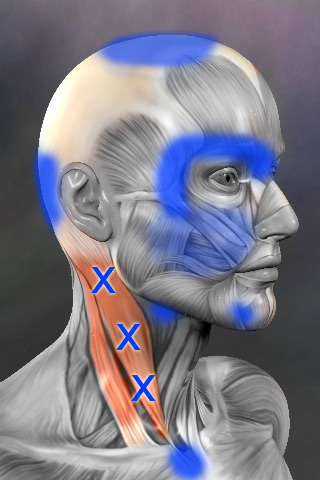
Shoulder and neck muscles referring pain into the head
-
Gluteal muscles referring pain into the low back or down the leg
-
Forearm muscles referring pain into the wrist or hand
-
Chest muscles referring pain into the shoulder or inner arm
These patterns are one of the main reasons trigger point therapy is so useful in clinical massage and orthopedic work.
How Referral Patterns Change Assessment
When you understand referral patterns, your assessment becomes more efficient and more accurate.
Instead of asking only, “Where does it hurt?” you begin to ask:
-
What movements reproduce the pain?
-
Which muscles are involved in those movements?
-
Which tissues commonly refer pain into this area?
This shifts your work from symptom chasing to cause-based treatment.
Using Referral Patterns in Massage Sessions
In practice, referral patterns help you decide where to start your palpation, which areas to treat first and why some areas respond quickly and others do not.
When you press on a trigger point and the client says, “That’s the pain I’ve been feeling,” you’ve likely found a key contributor to the problem.
From there, treatment becomes more focused and more efficient.
Referral Patterns in Orthopedic Massage
Orthopedic massage is built around assessment, movement testing, and clinical reasoning. Referral patterns fit naturally into this approach because they explain many pain presentations that do not match simple local tissue irritation.
Trigger points and referral patterns are a core part of the assessment and treatment strategy taught in our Orthopedic Massage Online Course.
Rather than treating pain as a single spot, orthopedic massage looks at how muscles, joints, and movement patterns interact to create symptoms.
Why Memorizing Charts Is Not Enough
Referral pattern charts can be helpful, but they are only a starting point. Real clients rarely match diagrams perfectly.
What matters more is seveloping palpation skill, learning to feel tissue quality, listening to the client’s responses and testing your findings with movement and function.
Referral patterns guide your thinking, but your hands confirm your decisions.
Learning to Work with Referral Patterns
Learning to recognize referral patterns takes time and repetition. It is best learned in a clinical context where assessment, treatment, and re-testing are part of the process.
Many therapists develop this skill through orthopedic massage, neuromuscular therapy, and trigger point–focused training.
To explore more clinical massage and assessment-based topics, visit our massage reference library.
In the next article, we’ll look at how trigger point therapy fits into a full orthopedic massage treatment approach and how to integrate it into real sessions -click here-