Beyond the Basics: How to Integrate Lymphatic Drainage into a Wellness Massage
Many massage therapists feel they have to choose between a clinical lymphatic session and a relaxing wellness session. However, understanding how to weave subtle lymphatic clearing into your standard Swedish or Deep Tissue protocols can significantly improve client outcomes—especially for those dealing with minor seasonal allergies, sluggishness, or post-travel puffiness.
The Clear the Well Strategy
In a standard massage, we often move fluid toward the heart. However, if the “wells” (the lymph nodes) are congested, that fluid has nowhere to go. By spending just five minutes at the beginning of a session clearing the terminus (above the clavicles) and the axillary nodes (armpits), you create a vacuum effect that allows the rest of your Swedish strokes to be more effective. In addition, you can also perform some lymphatic drainage on the ankles at the end of the session if the client has edema. There is no reason you must perform a full lymphatic drainage sequence every time.
When to Pivot from Deep Tissue to MLD
One of the most important skills for a therapist is recognizing boggy tissue. If a client presents with a limb that feels heavy or stays indented after pressure (pitting edema), traditional deep tissue can actually be counterproductive. In these moments, switching to gentle Vodder-style strokes—like the stationary circle—is the more professional and effective choice. Also, if a client has a sprained or strained ankle and you have been working with x-fiber friction or myofascial release (later in the injury cycle), or working on the muscles that control the ankle- you can use lymphatic drainage just above the joint to clear out fluid after the deeper work is complete.
3 Simple Ways to Incorporate MLD Today
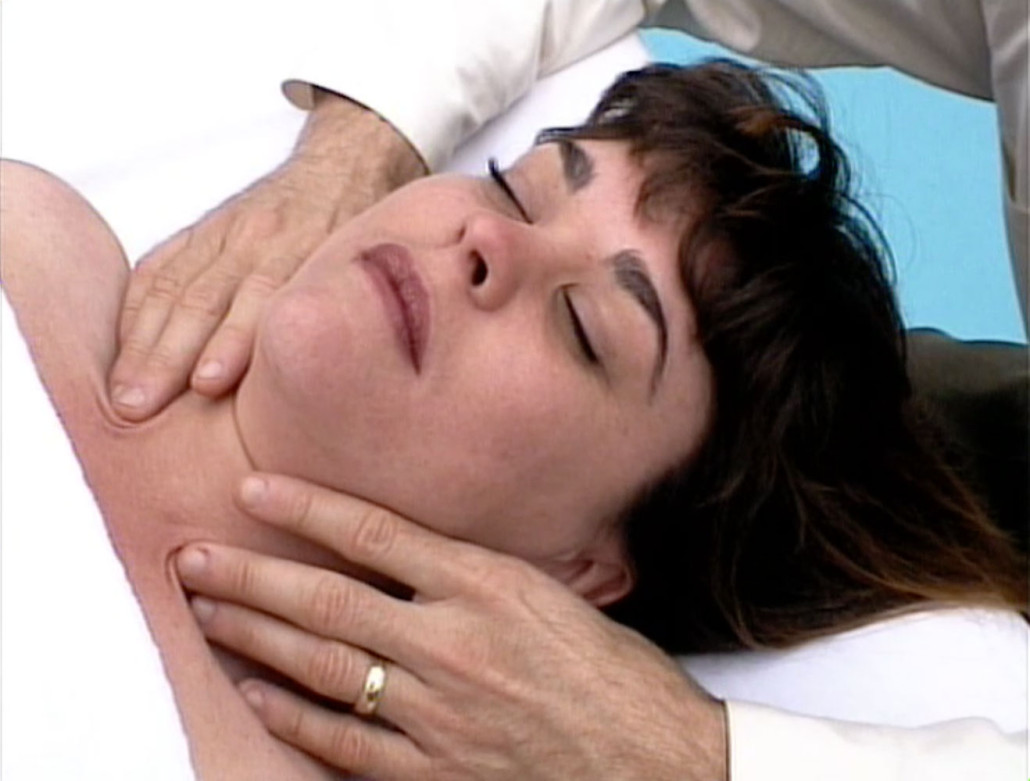
- The Neck Sequence: Start every prone or supine neck massage with light downward strokes toward the clavicle to clear the deep cervical chain.
- Abdominal Breathing: Encourage diaphragmatic breathing at the start of the session to stimulate the cisterna chyli, the heart of the lymphatic system.
- The Finish: End your limb work with feather-light effleurage to ensure the superficial lymphatics are stimulated before the client gets off the table.
Conclusion
While these integrations provide a boost to your wellness sessions, performing a full Manual Lymphatic Drainage (MLD) protocol requires specialized training to ensure safety and clinical efficacy.
Ready to master the full protocol? Explore our Lymphatic Drainage Massage Online Class for a complete step-by-step certification.
Want to explore more articles on massage and bodywork? Visit our massage reference hub!
About the Author: Sean Riehl
Sean Riehl is the founder of Real Bodywork and a leading expert in massage therapy and bodywork education with over 25 years of experience. A pioneer in clinical instruction, Sean has authored numerous textbooks and produced over 40 instructional videos used by massage schools and practitioners worldwide.
Beyond his clinical and educational work, Sean has been a driving force in the wellness industry’s growth. In 2022, he was a founding member of iFlex Stretch Studios, a premier assisted stretching franchise. Following the acquisition of iFlex by the founders of StretchLab in late 2024, Sean served as the Vice President of Training through 2025. In this role, he worked closely with the executive team to elevate training standards and curriculum for hundreds of practitioners before retiring from the position at the end of the year to focus on his educational legacy.