
What Is Myofascial Release Massage?
What Is Myofascial Release Massage?
What is myofascial release massage?
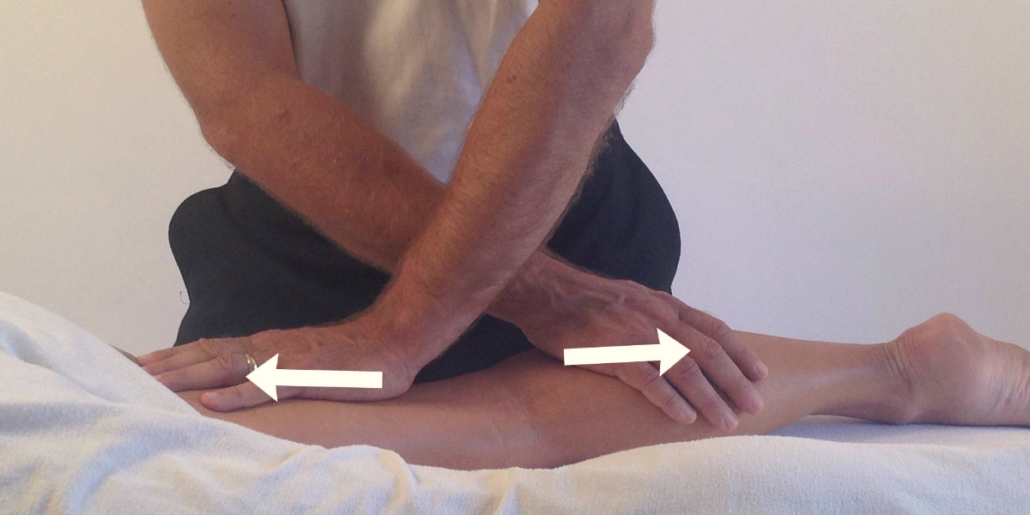
Myofascial release is a manual therapy approach that works with the body’s fascial system to reduce restriction, restore movement, and improve structural balance. Fascia is a connective tissue network that surrounds and connects muscles, joints, nerves, and organs throughout the body.
Rather than using rhythmic strokes or deep pressure, myofascial release relies on gentle, sustained contact that allows the tissue to soften and reorganize over time.
What is fascia?
Fascia is a connective tissue composed primarily of collagen, elastin, and ground substance. It forms a continuous network that supports and organizes all structures in the body. Because fascia is continuous, restriction in one area can affect movement and comfort in distant regions.
Healthy fascia is hydrated and pliable. When fascia becomes restricted due to injury, repetitive strain, immobility, or aging, movement can become limited and inefficient.
How does myofascial release work?
Myofascial release works by applying slow, sustained pressure into restricted areas of fascia. This allows the ground substance within the tissue to become more fluid, enabling collagen fibers to lengthen and adhesions to soften.
As the tissue responds, the practitioner follows subtle changes in direction rather than forcing a stretch. This process is often referred to as tissue unwinding.
How is myofascial release different from massage?
Unlike traditional massage techniques that focus primarily on muscles, myofascial release targets the connective tissue system. It typically uses slower pacing, minimal oil or lotion, and sustained contact rather than continuous gliding strokes.
The goal is not to create short-term relaxation, but to support lasting changes in movement patterns and structural balance.
What is myofascial release commonly used for?
Myofascial release is commonly used to help:
- Improve range of motion
- Reduce chronic tension
- Address postural imbalances
- Support recovery from injury
- Improve movement efficiency
Because fascia affects the whole body, this approach is often used when symptoms do not respond well to isolated or force-based techniques.
Learning myofascial release as a practitioner
For massage therapists and bodyworkers, learning myofascial release requires developing palpation skills, patience, and an understanding of fascial anatomy. A structured approach helps practitioners apply the work safely and effectively within full treatment sessions.
If you’re interested in how to apply myofascial release within a full massage session, including sequencing and combining it with other modalities, see our article on integrating myofascial release into massage.
Our Myofascial Release Online Course teaches the principles, techniques, and clinical reasoning needed to work with fascia in a clear and systematic way.
For additional background on fascia and related bodywork topics, explore our full massage and bodywork reference library.
About the Author

Sean Riehl is the founder of Real Bodywork and a leading expert in massage therapy and bodywork education with over 25 years of experience. A pioneer in clinical instruction, Sean has authored numerous textbooks and produced over 40 instructional videos used by massage schools and practitioners worldwide.
Beyond his clinical and educational work, Sean has been a driving force in the wellness industry’s growth. In 2022, he was a founding member of iFlex Stretch Studios, a premier assisted stretching franchise. Following the acquisition of iFlex by the founders of StretchLab in late 2024, Sean served as the Vice President of Training through 2025. In this role, he worked closely with the executive team to elevate training standards and curriculum for hundreds of practitioners before retiring from the position at the end of the year to focus on his educational legacy.