
Orthopedic Assessment Online Class
The Orthopedic Assessment Online Class teaches a comprehensive, clinically grounded approach to evaluating musculoskeletal function. This course brings together proven orthopedic evaluation strategies for both upper and lower body, giving you the ability to systematically identify dysfunction, dysfunction patterns, and the structures most likely contributing to pain or limited motion. You will learn how to conduct precise orthopedic assessments that inform more effective treatment plans and improve outcomes for your clients.
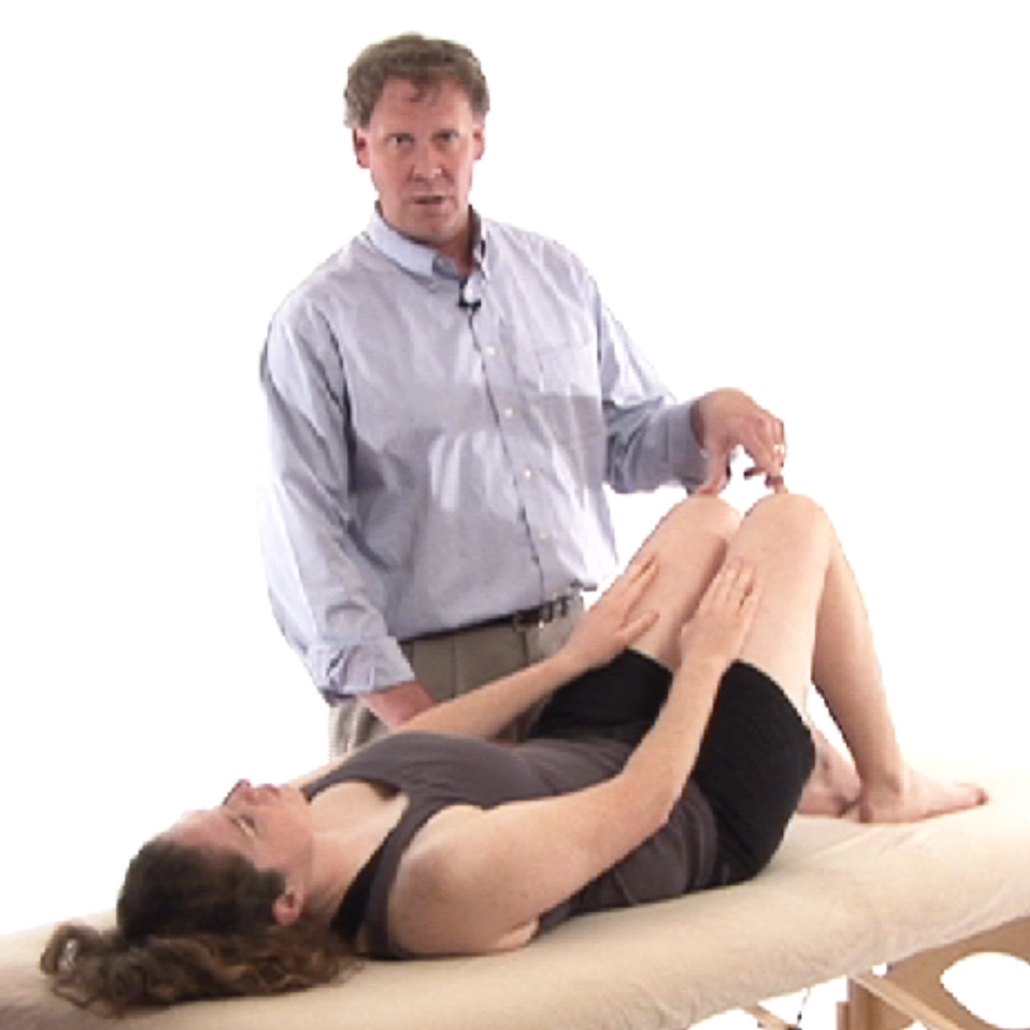
Course Overview
This online orthopedic assessment class covers head-to-toe evaluation techniques including joint play, range of motion, special tests, and functional movement assessment. Lessons are organized to build your clinical reasoning step by step, beginning with foundational theory, progressing through region-specific assessments, and ending with integration strategies you can apply immediately in practice. The course is designed to support massage therapists, bodyworkers, and manual clinicians in developing reliable orthopedic evaluation skills to better understand what structures are involved and why.
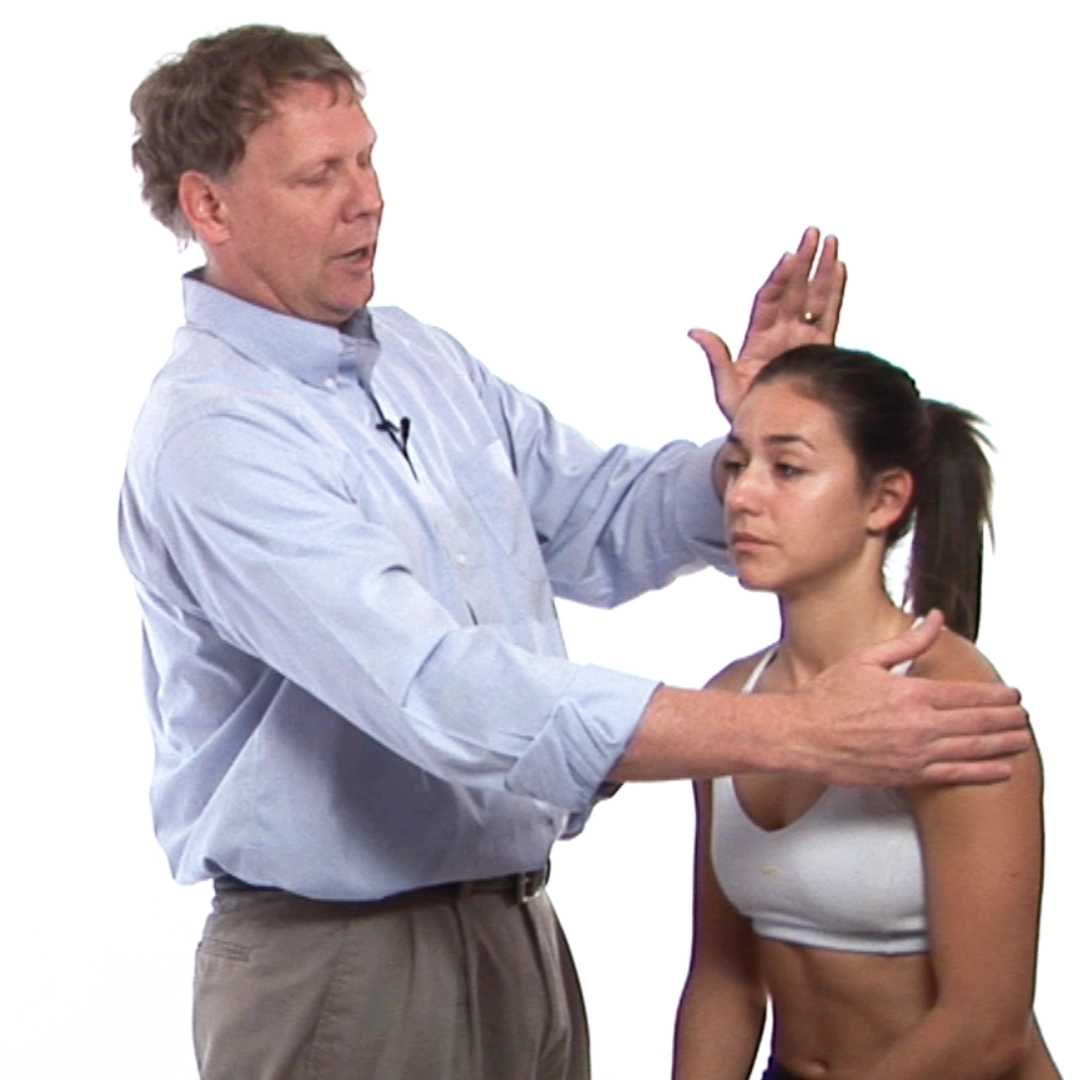
What You Will Learn
- How to perform systematic orthopedic assessments that differentiate between muscular, joint, neural, and connective tissue dysfunctions
- Foundational principles of orthopedic testing including joint play, accessory motion, and tissue tension evaluation
- Upper body assessment techniques for the shoulder complex, elbow, wrist, cervical spine, and associated functional movements
- Lower body orthopedic assessment methods covering the hip, knee, ankle, foot, lumbar spine, and functional movement patterns
- How to interpret special tests and functional movement findings to inform clinical decision-making
- Strategies for integrating assessment findings with treatment planning and session structuring
- How to document and communicate orthopedic findings clearly and clinically
Course Details & Learning Materials
- Format: On-demand online video lessons covering both upper and lower body orthopedic assessment methods
- Instruction: Clear, region-by-region demonstrations of orthopedic tests, accessory motion evaluation, and clinical interpretation
- Content: Comprehensive modules that include joint play, range of motion, special tests, functional movement evaluation, and integration strategies
- Skill Level: Designed for massage therapists, bodyworkers, and manual clinicians with foundational anatomy knowledge
- Lessons: Progressive sequence from foundational principles through advanced regional assessment
- Access: Unlimited lifetime access after enrollment
- Certificate: Downloadable certificate of completion provided
Who This Course Is For
This course is designed for massage therapists, bodyworkers, and manual clinicians who want a clear, systematic approach to orthopedic assessment. It is especially well suited for practitioners who work with clients experiencing pain, limited range of motion, or functional movement restrictions and want to better understand which tissues and joints are involved. The class supports therapists who value accurate evaluation and clinical reasoning as the foundation for effective treatment, and who want to move beyond guesswork toward more confident, consistent outcomes.
Meet your instructor:
Alan Edmundson entered the physical therapy field as a licensed assistant in 1981 and became a registered physical therapist in 1984 after graduating from Los Angeles Children’s Hospital School of Physical Therapy, affiliated with the University of Southern California. Alan specializes in outpatient orthopedics and had the opportunity to treat athletes from UCSB and Westmont colleges, all of the local high schools, semiprofessional and club teams. Alan has taught kinesiology at UCSB and lectured at professional conferences. Alan joined Alta Orthopedics in April of 2005 after 15 years of ownership of his Santa Barbara private practice, Advanced Orthopedic Physical Therapy.

Lessons
Introduction to Orthopedic Assessment
Free Preview
This lesson describes the theory behind the assessment techniques, and what exactly certain symptom indicate. He discusses general evaluation techniques and introduces basic tests
Ankle 1 subjective
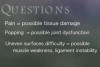
This lesson shows how to perform a subjective evaluation on the ankle. This includes which questions to ask, for example; How far do you walk each day? Have you recently changed your shoes? Have you had any surgeries? Where is your pain located? Have you had any sprains?
Ankle 2 observation
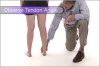
This lesson shows how to observe knee position, high/low arch, standing habits, symmetry, swelling, tendon angle, dorsiflexion, plantar flexion, inversion and eversion.
Ankle 3 tests

This lesson demonstrates strength testing for dorsiflexion, inversion, eversion, and plantar flexion. It also shows passive ROM testing for these same motion, plus the anterior drawer test
Ankle 4 palpation
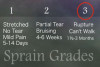
This lesson shows how to palpate the ankle including the malleolus, for bunions, achilles’ tendon, plantar fascia, perennial tendons, lateral ligaments, high tibial sprain, flexor tendons, and the deltoid ligament as well as a joint evaluation. Also included is information on degrees of injury.
Knee 1 subjective

This lesson includes questions you can ask the client. Does it hurt climbing a stair, stepping off a curb? Does it hurt while sitting, is there weakness or swelling, does the pain move? Any grinding. Alan discusses what each of these answers means.
Knee 2 observation
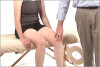
This is a knee inspection. Looking at any swelling outside or inside the swelling, is the musculature atrophied? Examine knee cap for crepitus, evaluate knee extension for hamstring tightness.
Knee 3 tests

This lesson covers flexor and extensor strength testing, passive flexion and extension testing, medial and lateral collateral ligament testing, drawer test, Lachman’s test, McMurray’s test, femoral nerve test and observing the patellar orientation.
Knee 4 palpation
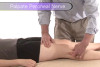
This lesson shows how to palpate for dysfunction the following structures: Gurdy’s tubercle, pez anserine, joint line, patellar tendon, popliteal fossa, hamstring muscles, gastrocnemius, peroneal nerve, fibular head, quadriceps.
Hip 1 observation

This lesson demonstrates how to observe the hips. Alan shows how to evaluate the following structures: anterior symmetry, ASIS level, iliac crests, pelvic tilt, hip contour, lumbar curve, PSIS, flexion test, posterior symmetry, arm swing, hip sway, push, forward swing, hip flexion, hip rotation.
Hip 2 tests
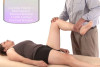
This lesson covers passive hip flexion, rotation and abduction plus strength testing for flexion, extension and abduction. Alan then discusses what each test means.
Hip 3 special tests
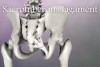
This lesson demonstrates special tests specific to the hip. This includes: Ober’s test, Thomas test, straight leg raise, grind test, sacrotuberous ligmament test, and the distraction test.
Hip 4 palpation

This lesson shows palpation examination for the following structures in the hip. The iliopsoas tendon, rectus femoris, tensor fascia latae, greater trochanter, abductor group, joint spring test, coccyx.
Spine 1 anatomy and observation
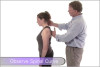
In this lesson Alan demonstrates how evaluate shoulder height, ASIS level, spinal curve from the back and side, forward bending, extension, side bending and rotation.
Spine 2 tests
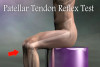
This lesson covers function strength testing for the lumbar spine, including flexion, rotation, extension, and lateral flexion. Also covered are reflex testing for L3 and 4, tibias strength for L4, Big toe extensor strength for L5, everter strength for S1, the slump test, upper and lower abdominal strength testing, straight leg raise, mobility testing for extension and rotation, thoracic spring testing, Si joint spring testing, femoral nerve test and how to test for vertebral positioning.
Spine 3 palpation

In this lesson, Alan demonstrates palpation of the erectors, interspinous ligament, iliolumbar ligament, fibrositic nodules, gluteus medius, piriformis, quadratus lumborum and the psoas.
Shoulder 1 subjective

In this lesson discusses how to talk to the client about their experience of their shoulder. He discusses signs of rotator cuff impingement, bicipital inflammation and anterior instability, as well as talking to the client about dislocations, scars, medication, pain at night, or pain that is traveling (into the neck or down the arm) for possible nerve issues.
Shoulder 2 observation
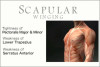
During the objective section of shoulder evaluation, Alan demonstrates how to evaluate shoulder height, trapezius muscularity comparison, ACL step off, deltoid muscular comparison, shoulder anterior-posterior position, infraspinatus muscularity comparison, rhomboid tension comparison, and ROM for forward flexion, abduction, external rotation, internal rotation and shoulder girdle ROM for all motions.
Shoulder 3 tests

This lesson demonstrates strength testing for forward flexion, external rotation, internal rotation, abduction and the deltoid sensory nerve test.
Shoulder 4 special tests
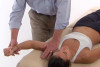
This lesson covers special testing including the empty can test, crank test, biceps tendon test, passive movement in forward flexion, rotation, and abduction. Alan also covers the impingement test, hawkin’s maneuver, distraction test, relocation test, global stability test, radial nerve test and median nerve test.
Shoulder 5 palpation
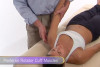
Alan shows how to palpate the clavicle, acromioclavicular joint, coracoid process, the joint line and subacromial bursa, biceps tendon, deltoid muscle, posterior rotator cuff muscles, supraspinatus tendon
Neck 1 subjective

This lesson demonstrates how to evaluate the neck by looking at shoulder position, lateral tilt, lateral shift, head forward, active flexion, active rotation, side bending, shoulder elevation, shoulder flexion and TMJ range of motion.
Neck 2 tests
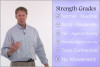
This lesson demonstrates strength testing for flexion, extension, side bending, and rotation, as well how how to grade for strength. Alan also shows how to perform strength testing for scapular elevation and flexion as well as TMJ strength.
Neck 3 special tests

This lesson shows how to perform the quadrant test, the distraction test, the compression test, adson’s test, reflex testing, neurological strength testing, sensory nerve signs and the vertebral artery test. He also discusses various dermatomes and which vertebrae they relate to.
Neck 4 palpation
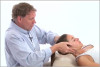
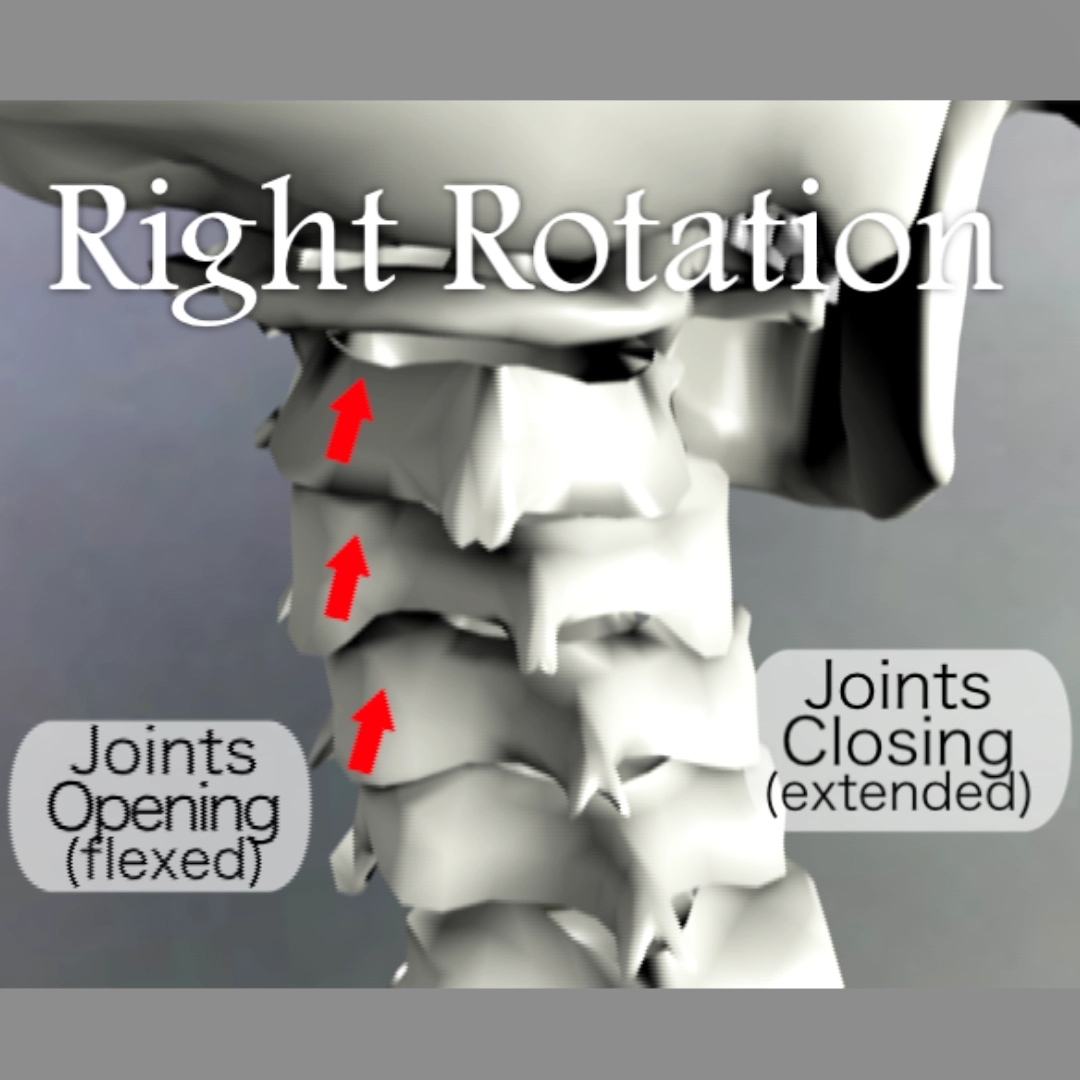
This lesson demonstrates how to use palpation to discover issues in the posterior musculature, scalenes, SCM, subboccipitals, TMJ, facet joints, atlas, axis, and the atlanto-occipital joint. He also shows techniques to free facet joint restriction.
Elbow
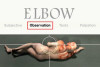
This lesson shows how to evaluate the elbow for swelling, scars, carrying angle, atrophy and the ability to flex, extend, pronate and supinate. Then it covers strength testing, passive ROM testing, ligament testing, Tinel sign and the test for tennis elbow.